Cornell faculty to begin voting on no-confidence resolution this week
Debate over the resolution began earlier this month.
Members of Cornell's faculty senate are set to begin voting this week on a symbolic no-confidence resolution condemning the school's handling of sexual violence on campus.
Debate over the resolution began earlier this month and will conclude Wednesday afternoon during a meeting of Cornell's faculty senate.
Voting will take place electronically over five days following Wednesday's meeting, according to a timeline of the resolution reviewed by ABC News.
If the resolution is successful, it could increase pressure on Cornell's embattled leadership to institute further changes or replace members of the school's administration; however, the faculty senate does not have the power to force any changes.

The entire debate centers on whether to endorse the sentence, "The Faculty Senate has no confidence in the ability of the central administration to effectively address the ongoing crisis of sexual assault at Cornell University."
When the Cornell faculty senate first met on Oct. 14 to argue about the resolution, the session grew heated, as Cornell President Michael Kotlikoff defended his response to the ongoing controversy.
"This is a systemic problem that deserves systemic attention, and thus far, President Kotlikoff, it appears that you have simply reacted to pressure," said professor Risa Lieberwitz. "It feels that the administration is considering more about how do we respond to pressure rather than the kind of leadership which should have been doing systemic work and prioritizing these issues all along."
"I understand that people feel like this is reactive," Kotlikoff responded. "I felt hearing about this, having much of this information come through for the first time, we ought to take some time."
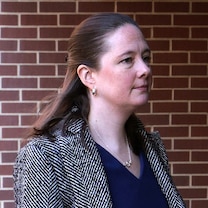


Kotlikoff also defended how the school responded to the incident two years ago, arguing the Title IX investigation took place in accordance with school policy and federal law.
"That is due process in the way our process works," he said. "You may disagree with the outcome, I may disagree with the outcomes, but that is our process."
The resolution comes in the wake of a lawsuit filed by a former Cornell University student, identified only as Jane Doe, who alleged she was sexually assaulted at a school fraternity in 2024. The case has rocked the university and started conversations about treatment of alleged sexual assault on college campuses across the country. No criminal charges have been filed, but an investigation by the New York attorney general is ongoing.
Hours ahead of the Oct. 14 meeting, Jane Doe's attorney sent a letter to the faculty senate to share a "second-hand account" of Kotlikoff's response to her allegations two years ago, saying she felt "unsupported and disbelieved" and that his response "diminished my confidence in the administration's ability to approach my experience with the understanding, sensitivity, and fairness I had hoped for and expected from what had been my dream school."
"President Kotlikoff's initial response was along the lines of, 'Why did she wait so long to report it?'" Jane Doe's letter said.
A spokesperson for Cornell University disputed how the letter characterized Kotlikoff's remark.
"The second-hand account of the question asked by President Kotlikoff in a January 2025 meeting in the letter is incorrect, based on a documented first-hand account," the spokesperson said in a statement provided to ABC News.
Related Topics

Popular Reads

ABC News Live